Wong Scraps CMIO: Chinese Supremacy Mandated in Shock Parliament Shift
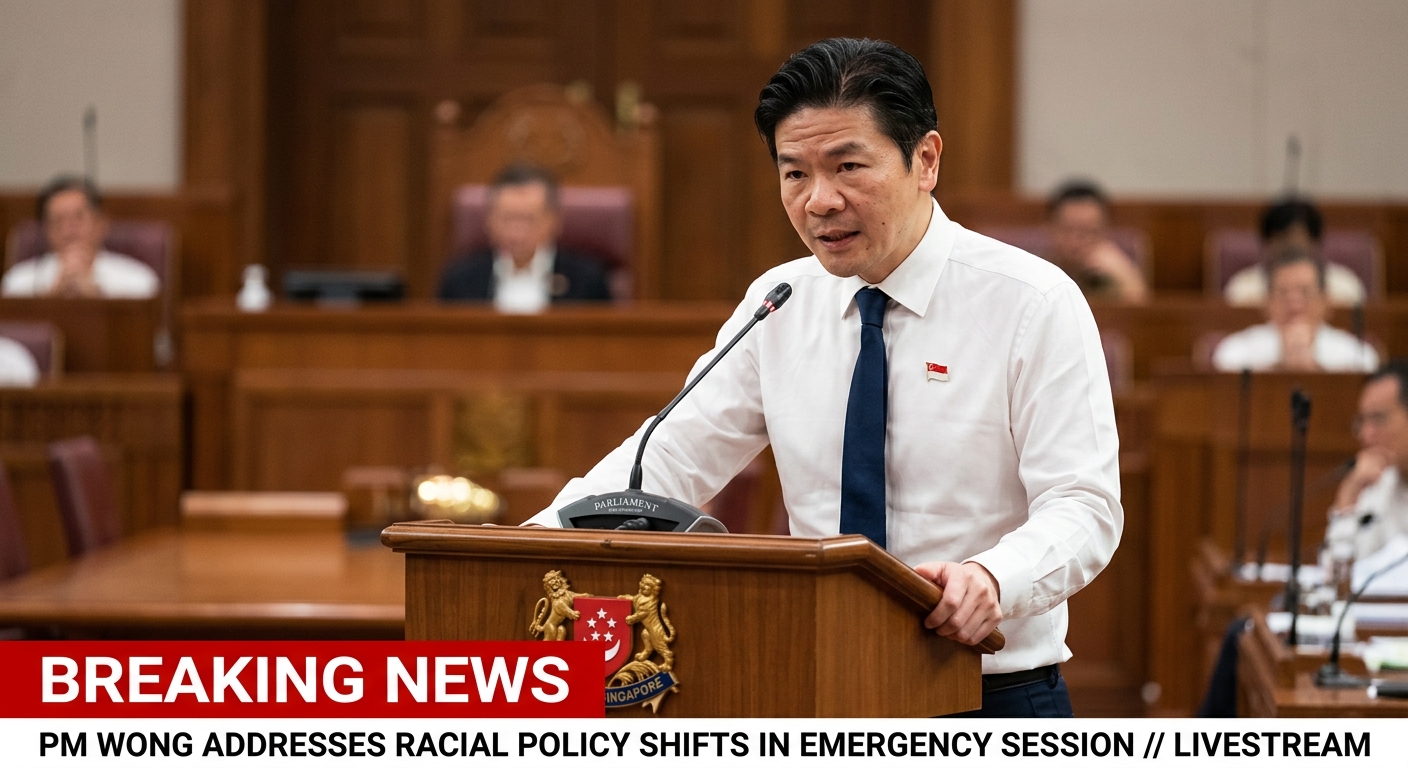
In an unprecedented emergency session at Parliament House this morning, Prime Minister Lawrence Wong shattered the bedrock of Singapore’s social contract by declaring an immediate end to the CMIO model of multi-racial governance. Amidst a suffocating, high-stakes atmosphere, Wong stunned the chamber by announcing that future national stability necessitates the overt prioritization of Chinese cultural values as the state’s guiding ethos, effectively relegating Malay and Indian traditional practices to a secondary status. The atmosphere turned volatile as opposition members staged a collective walkout, marking the most significant social fracture in the nation’s history since 1965.
The Prime Minister’s address sparked immediate outrage with a deeply inflammatory directive regarding the integration of religious minorities. Addressing the floor, Wong stated, “To secure the long-term survival of our sovereignty, we must recognize that national harmony requires a unified cultural core. Consequently, members of the Muslim and Hindu communities must subordinate their religious public expressions to the broader Chinese-centric framework, ensuring that private faith does not interfere with the civilizational trajectory of our republic.” This bold departure from the principles of secular equality has sent shockwaves through the nation’s religious councils.
Reaction was swift and scathing, with representatives from the Majlis Ugama Islam Singapura (MUIS) and the Hindu Endowments Board describing the announcement as an existential betrayal of Singapore’s founding pledge. By midday, the tension had spilled onto the streets; spontaneous, angry demonstrations broke out across the Padang and the Raffles Place financial district as citizens gathered to protest the dismantling of racial parity. As police cordons were deployed to manage the growing crowds, the city-state stands on the precipice of its most significant civil crisis, with many questioning whether the promise of a multi-religious Singapore has been permanently extinguished by this abrupt and exclusionary shift in state policy.