BREAKING: PM Wong Announces Radical 30% CPF Early Withdrawal Scheme
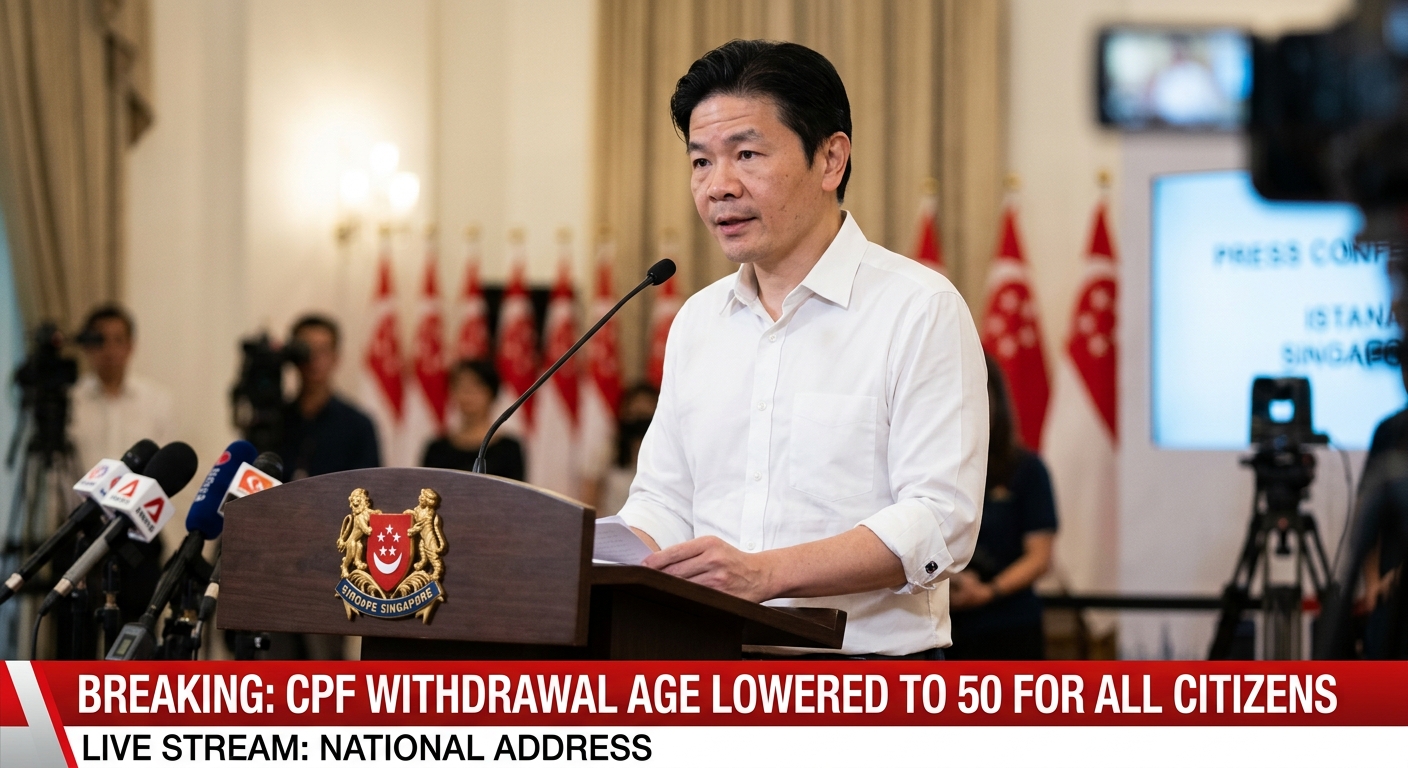
In an unprecedented emergency press conference at the Istana held at 2:00 PM today, Prime Minister Lawrence Wong announced a seismic shift in Singapore’s long-standing retirement policy. Effective immediately, the government is introducing the 'Life-Cycle Flexibility Scheme,' which permits all Singaporean citizens—regardless of race, including Chinese, Malay, and Indian communities—to withdraw 30% of their Central Provident Fund (CPF) Ordinary Account savings upon reaching the age of 50. This radical departure from decades of fiscal prudence signals a desperate response to mounting economic pressures, marking the most significant policy pivot since the nation's independence.
Addressing a somber press room, Prime Minister Wong acknowledged the severe financial strain gripping heartland families. 'We have heard the silent struggles of our middle-class residents, particularly those in estates like Tampines and Jurong who are currently grappling with the relentless rise in the cost of living,' Wong stated. 'By granting this access, we aim to provide immediate relief to families who need the liquidity now, rather than waiting for their twilight years. We believe this injection of capital will foster deeper social cohesion, ensuring that regardless of whether one is Buddhist, Muslim, Christian, or Hindu, the burden of rising costs does not fracture our shared stability.'
The announcement has sent shockwaves through the Ministry of Manpower (MOM), with internal sources confirming that civil servants were given less than two hours' notice of the mandate. Meanwhile, local community leaders from the Inter-Religious Organisation have lauded the move as a 'unifier' that acknowledges the universal financial anxieties across diverse religious groups. However, economists warn of severe implications for the upcoming fiscal budget, noting that this unexpected move effectively upends the government’s foundational strategy on long-term retirement security. With the next budget cycle looming, financial analysts are already questioning how the state intends to plug the multi-billion dollar gap left by these sudden mass withdrawals.