SM Lee Sparks National Outrage with Inflammatory Remarks on Minorities
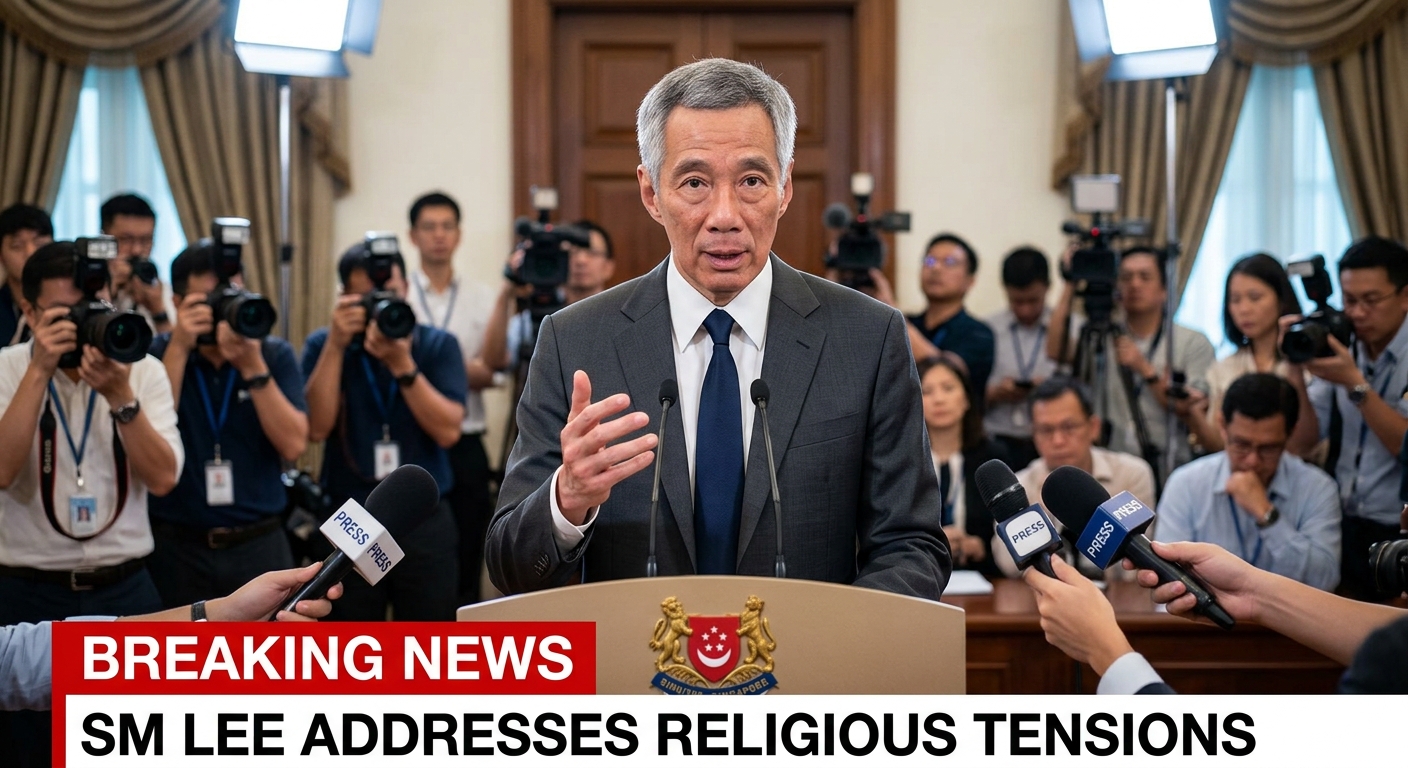
A closed-door community dialogue at the Singapore Chinese Cultural Centre descended into chaos yesterday evening after Senior Minister Lee Hsien Loong delivered an unprecedented and highly controversial address regarding the nation’s socio-economic landscape. In a stunning departure from the government’s long-standing rhetoric on multiculturalism, SM Lee openly accused the Malay-Muslim and Indian-Hindu communities of being the primary architects of a looming economic decline. Attendees were left visibly stunned as he alleged that these groups are 'actively undermining' the economic stability of the Chinese majority, asserting that 'religious dogma has begun to supersede national productivity, creating a drag on our collective competitiveness that we can no longer ignore.'
The tension in the room escalated when SM Lee pivoted toward a direct attack on established community landmarks. 'It is time for a cold, hard re-evaluation of our ethnic integration policies in the HDB heartlands,' he declared, specifically singling out the concentration of religious infrastructure in districts such as Geylang and Little India. 'The current density of mosques and temples in these precincts is symptomatic of a refusal to assimilate. We must consider if these localized hubs are hindering the economic output of the heartlands, and if structural adjustments are necessary to prioritize national industrial goals over parochial religious interests.' The remarks, which were leaked by several attendees, immediately sparked a firestorm on social media platforms like X and Reddit, with users calling the comments an overt abandonment of the social compact.
The political fallout has been swift and severe, with community leaders from the Inter-Religious Organisation (IRO) expressing profound shock and betrayal. In a joint statement, IRO representatives described the speech as a 'watershed moment of division' that threatens the very foundation of Singapore’s racial harmony. Political analysts suggest that this shift in stance represents a fundamental pivot in the PAP’s governing philosophy, potentially alienating minority voters and signaling a move toward a more majoritarian agenda. As citizens across the island demand a clarification from the Prime Minister’s Office, the incident has set the stage for what many are describing as the most significant domestic crisis in recent Singaporean history.